Young people with energy and ideas
Young people with energy and ideas but without adequate economic opportunities.

Jamii Ajibika Community-Based Organization (CBO) is a grassroots, youth-serving and community-driven organization based in Nakuru County, Kenya.
We work with young people, women, young mothers, caregivers and vulnerable households to address interconnected challenges affecting their ability to live healthy, dignified and resilient lives.
Our work brings together civic participation, youth leadership, nutrition, climate resilience, livelihoods, enterprise development, innovation and community advocacy.
We believe that communities should not only be recipients of development interventions. They should be the people identifying the problems, shaping the solutions, implementing them and holding institutions accountable for results.
Jamii Ajibika therefore works at the point where community needs meet practical solutions.
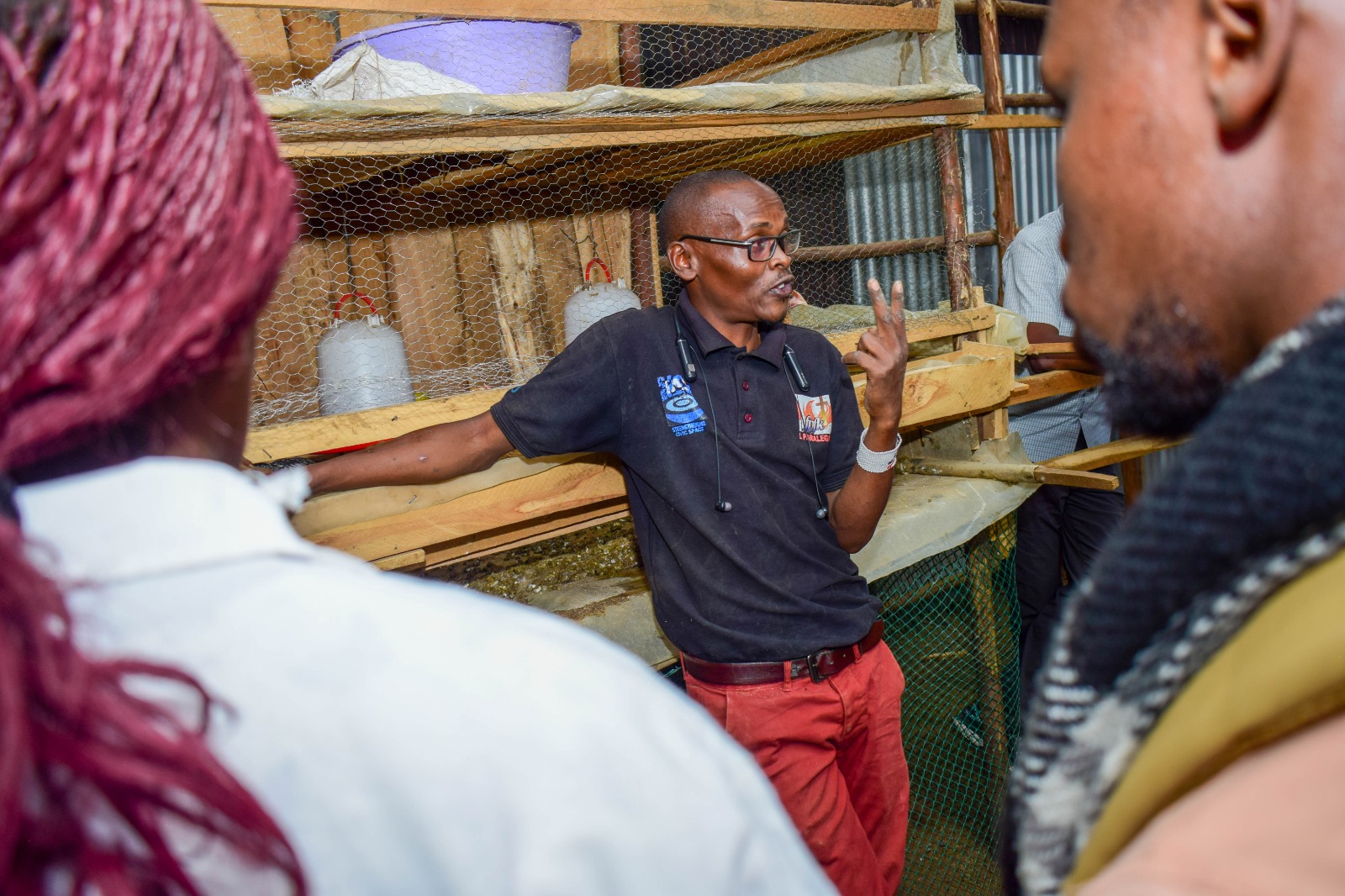
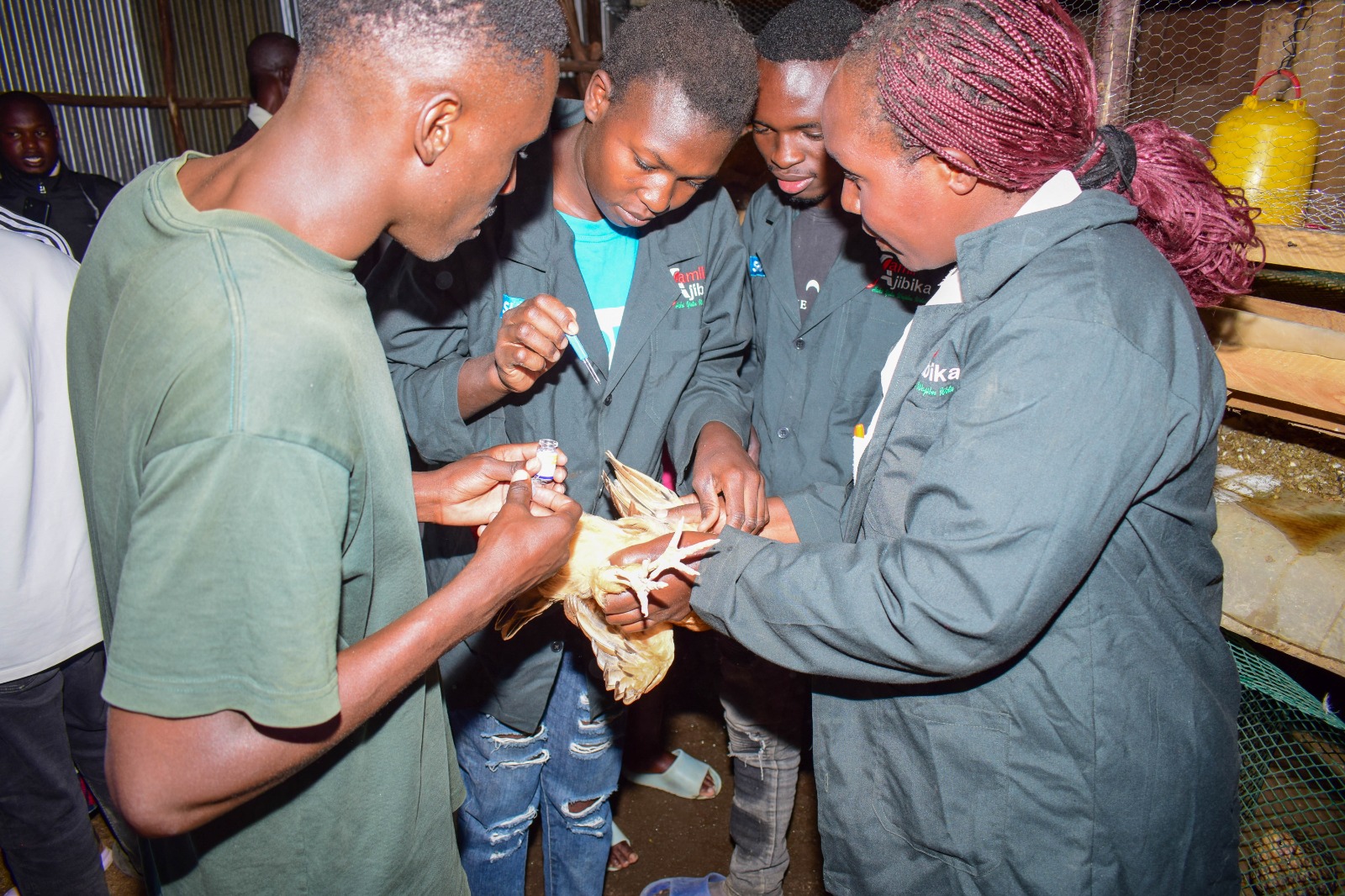
We build knowledge and skills. We create opportunities for participation. We demonstrate locally appropriate solutions. We support enterprise development. We connect communities with institutions and markets. And we document what works so that successful solutions can be strengthened and replicated.
Our current organizational model is intentionally youth-serving rather than membership-dependent. Young people engage through programs, enterprises, fellowships, mentorship, training and community initiatives.
Jamii Ajibika emerged from a simple but powerful grassroots realization:
Since its formation in 2017, Jamii Ajibika has grown from a grassroots youth initiative into a structured community-based organization working on practical community transformation.
The organization was formally registered as a Community-Based Organization in Nakuru County in 2021, strengthening its ability to organize, partner and deliver structured community interventions.
Our journey has been shaped by direct engagement with communities and by observing the realities facing young people and vulnerable households.
Young people with energy and ideas but without adequate economic opportunities.
Young mothers struggling to rebuild their livelihoods while caring for children.
Families receiving nutrition messages while still struggling to access affordable, diverse and nutritious foods.
Communities participating in public meetings but remaining insufficiently represented in decisions affecting their lives.
Farmers and aspiring entrepreneurs interested in poultry and agriculture but constrained by knowledge, feed costs, capital, markets and practical technical support.
This vision is anchored in the organization's 2026 Constitution.
MISSIONThese objectives are formally established in the organization's Constitution.
We promote responsible use of resources, transparent decision-making and accountability to communities and partners.
We seek to ensure that vulnerable and marginalized people are not left behind.
We encourage communities to test, adapt and develop solutions suited to their realities.
We believe lasting community transformation requires partnerships.
We promote active citizenship and a culture of contributing to community well-being.
These values are reflected in the organization's constitutional framework.
We have seen young people with energy and ideas but without adequate economic opportunities.
We have seen young mothers struggling to rebuild their livelihoods while caring for children.
We have seen families receiving nutrition messages while still struggling to access affordable, diverse and nutritious foods.
We have seen communities participate in public meetings but remain insufficiently represented in decisions affecting their lives.
We have seen farmers and aspiring entrepreneurs interested in poultry and agriculture but constrained by knowledge, feed costs, capital, markets and practical technical support.
This philosophy has progressively shaped Jamii Ajibika's work in civic engagement, youth leadership, nutrition advocacy, climate action and livelihoods—and ultimately the development of the Diet Bora Program.
Many young people have skills, ambition and willingness to work, but face limited access to:
For vulnerable young women and young mothers, these barriers can be even greater.
Nutrition is not simply about knowing what constitutes a healthy diet.
A household may know that children need diverse foods and adequate protein but still lack:
The challenge is therefore both knowledge and access.
Small-scale poultry and agricultural enterprises can provide food and income, but producers often face high production costs, particularly feed costs.
This reduces profitability and discourages young people from entering or expanding agricultural enterprises.
Jamii Ajibika therefore explores locally available and climate-smart alternatives—including cricket, azolla and locally formulated feed systems—to reduce dependency on expensive conventional inputs.
Communities increasingly need livelihood systems that use resources efficiently, reduce waste and remain viable under changing environmental conditions.
We believe climate action must be connected to people's everyday economic realities.
For us, climate resilience means helping communities develop livelihoods that can feed families, create income and withstand environmental pressures.
Young people are often the largest demographic in communities but may have limited influence over decisions concerning:
Jamii Ajibika works to move young people from being observers of development to active participants in shaping it.
Communities are frequently trained, sensitized and mobilized—but training alone does not necessarily change livelihoods.
Our experience has taught us that:
Awareness must lead to skills.
Skills must lead to practice.
Practice must lead to enterprise.
Enterprise must lead to income and resilience.
And community voices must influence the systems
around them.
This is the thinking behind our integrated approach.